


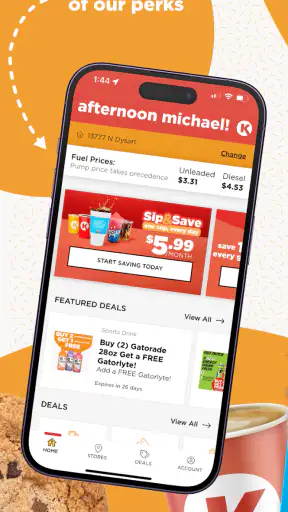
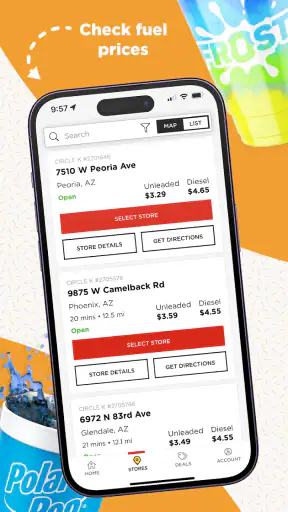
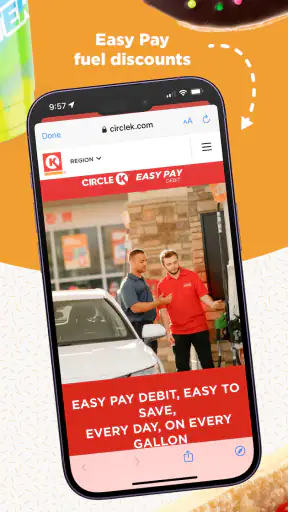
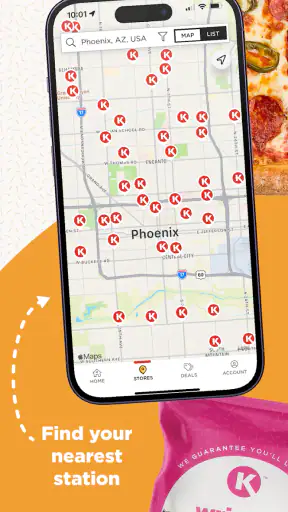
When I stop at Circle K, I usually want one of two things: a quick way to make the visit cheaper or a faster way to handle the small extras that come with buying fuel and drinks. The Circle K app is built around that exact routine. It is a free shopping app from Circle K North America, and after using it, I see it less as a general shopping tool and more as a companion for people who already visit Circle K often enough to benefit from fuel savings and store rewards.
That distinction matters. If you rarely visit Circle K, installing another retail app may feel like unnecessary effort. If the brand is part of your weekly driving routine, however, the app can turn an ordinary stop into a more organized, potentially cheaper visit. My overall impression is positive, but I would not recommend it blindly. The value depends on how regularly you use participating Circle K locations, how comfortable you are managing offers digitally, and whether saving a little time at the pump matters to you.
How I decided whether Circle K was worth keeping
I judged the app using practical questions rather than the store summary alone. First, does it help with the part of the visit that matters most to me: fuel? Second, are the rewards easy enough to use that I will remember them when I am standing at the pump or walking into the store? Third, does it offer a reason to open the app regularly instead of becoming another forgotten icon? Finally, does it make sense beside the alternatives, such as a bank card with fuel rewards, a general cash-back service, or a competitor’s station app?
On the basic trust side, the app has a 4.5 average from around 34 thousand ratings, with more than 5 million installs. That gives me confidence that it is established rather than experimental, although popularity does not guarantee that every location or phone will offer the same smooth experience. The current version is 4.11.2 and it requires Android 10 or later, so anyone using an older device should check compatibility before planning around it.
The age rating is Everyone, which fits the app’s purpose. There is no complicated entertainment layer or specialist knowledge required. I can imagine a driver using it for a normal fuel stop, a parent checking an offer before buying snacks for a trip, or a commuter trying to make recurring visits a little more worthwhile. The app is free to download, but the real cost is attention: I have to remember to open it, understand the available benefit, and use it at the right moment.
The first useful habit: open it before leaving home
The most practical workflow is not waiting until I am already parked. I would check the app before starting a journey, especially if I know I will need fuel. That gives me time to see what savings or free favorites are available and decide whether Circle K is worth choosing over another nearby stop. This small change avoids the common problem of discovering an offer only after paying.
It also helps separate genuine value from impulse buying. Convenience stores are designed for quick decisions, and a digital reward can make an extra drink or snack feel justified. I found it more useful when I treated the app as a planning tool: check the benefit first, choose what I actually need, and avoid adding items simply because the app has made the stop feel like a special deal.
Why fuel savings are the main reason to install it
For most people, fuel savings will be the deciding feature. A free drink is pleasant, but a tool connected to a recurring driving expense has a clearer long-term purpose. If Circle K is already on my route, I do not need to change my lifestyle dramatically to use the app. I can simply add one step before filling up and see whether the visit becomes more attractive.
There is an important trade-off, though. A saving is not automatically worthwhile if I drive out of my way to reach a Circle K location. The correct comparison is the complete cost of the trip, including extra distance, time, and fuel. I would use the app to choose among convenient Circle K stops, not as a reason to make a special journey for a small benefit. This is one of the clearest situations where a general fuel-reward card or a station already on my route may be better.
Free favorites are more useful for routines than occasional treats
The free-favorites angle works best when it matches something I already buy. For example, a commuter who regularly picks up a drink during a morning drive can get more practical value from a relevant offer than someone who visits only during rare road trips. I would look for repeatable usefulness rather than judging the app by a single attractive promotion.
There is also a timing issue. A favorite may be valuable only during a particular kind of stop, while fuel savings can influence a wider range of visits. I therefore see the free-item side as a bonus that improves the experience, not as the central reason to install the app. If the available reward fits my routine, it is a welcome extra. If it does not, the app still needs to justify itself through fuel-related value.
Where Circle K wins, and where another option may fit better
The strongest advantage is focus. This is not a broad marketplace trying to cover every kind of shopping. It is tied to a specific chain and a specific habit: stopping for fuel and convenience items. That makes the app easier to evaluate than a general rewards platform. I know what I am opening it for, and I can decide quickly whether today’s visit benefits from it.
It also keeps the reward conversation close to the purchase. With a general cash-back service, I may need to think about eligible merchants, activation steps, payout rules, or whether the offer applies to the exact purchase. A chain-specific app can feel more direct because the store and the reward belong to the same shopping journey. I still need to read the offer carefully, but the context is clearer.
Another strength is that it can support two types of purchases in one stop. Fuel savings address the larger transaction, while free favorites speak to the smaller convenience-store purchase. That combination is more useful than an app that only gives me a coupon for one snack. In a realistic evening scenario, I might be driving home with a low tank, stop at a Circle K already on my route, check the app before paying, and use the relevant benefit without having to manage a separate rewards system.
The app is also a better fit for people who prefer brand-specific tools over carrying a collection of paper coupons. I do not have to remember where I put a receipt or search through a wallet for a card. The phone becomes the place where I check the current opportunity. That convenience is modest, but repeated often, small improvements can matter.
When a bank card or general rewards service is the smarter choice
I would not replace a strong general fuel-reward setup automatically. If my bank card already gives me dependable value at many stations, it may be simpler to keep using it everywhere. A card is especially attractive when I want flexibility: I can choose the cheapest nearby station rather than favoring one brand. In that case, the Circle K app has to offer enough extra value to compensate for reduced choice.
A general cash-back service may also suit someone who shops across many retailers and dislikes maintaining separate apps. Its advantage is breadth, even if its offers are less tailored to a particular fuel stop. For an occasional Circle K customer, that broad approach may be more convenient than installing a dedicated app for a handful of visits.
On the other hand, a competing station app can be preferable for drivers whose routes are dominated by another fuel chain. Loyalty works best when it follows actual behavior. I would not change my normal route merely to collect digital rewards, and I would not keep Circle K installed if I almost never use Circle K locations. The app wins when convenience and loyalty overlap; it loses when the reward requires inconvenient travel.
The friction I would watch during everyday use
The main weakness is not that the app lacks a clear purpose. It is that digital rewards can add mental overhead to a purchase that should be quick. I have to remember to check the app, identify the useful benefit, and make sure I apply it correctly. If I am in a hurry, driving in poor weather, or dealing with a restless passenger, I may value a straightforward card payment more than a reward I have to manage.
Dependence on the phone is another practical limitation. A low battery, poor connection, or a forgotten login can turn a simple stop into a frustrating one. I would not rely on the app as my only payment or savings method. Keeping a normal payment option available is sensible, particularly during long drives or when stopping somewhere unfamiliar.
There is also a behavioral risk: the app can encourage me to think of a reward as permission to spend more inside the store. My rule would be to decide what I need before browsing the offers. That keeps the app working for my budget instead of turning a fuel stop into an unplanned shopping trip.
What switching really involves
Moving from no app to Circle K is a small change, but it is still a habit change. I would install it, set aside a few minutes to understand the reward flow, and then use it on a normal visit rather than testing it during a rushed trip. The first few uses should answer a practical question: do I consistently find a benefit that matters to my driving pattern?
Switching from another station app is more complicated because I may lose the convenience of having one familiar rewards routine. I would compare actual routes rather than advertised possibilities. If Circle K is closer to work or home, the switch may be easy. If another station is already cheaper or more convenient, the app alone may not justify changing.
The best approach is to run both habits briefly without forcing a permanent decision. I can keep using my usual station while checking whether Circle K naturally appears on my routes. If it does, the app earns a place on my phone. If not, deleting it is more sensible than keeping it installed for a theoretical future benefit.
Who should install it now
I recommend Circle K to regular customers who want a dedicated way to look for fuel savings and occasional free favorites. It is particularly suitable for commuters, frequent drivers, and households that already make repeated convenience-store stops. The free price removes the financial risk of trying it, while the established user base and strong average rating suggest that it is a mature choice for its audience.
I would also recommend it to someone who prefers to plan stops in advance. Checking before leaving, choosing a Circle K already on the route, and deciding on a needed purchase creates a simple routine with little disruption. The app is most convincing when it becomes part of that routine rather than something I remember only after arriving.
Who should skip it
I would skip it if I rarely buy fuel at Circle K, if I deliberately choose whichever station has the lowest price, or if I already receive better value through a flexible card-based reward system. I would also hesitate if I dislike managing offers on a phone. In those cases, the app may create more steps than savings.
Drivers with devices below Android 10 should consider that the current app requires a newer operating system. For everyone else, the question is not whether the app is free; it is whether Circle K is already part of the places they naturally visit. That is the dividing line between a useful companion and digital clutter.
My recommendation after using it
Circle K is worth trying when the brand already fits your route. I like its focused purpose, the combination of fuel savings with free favorites, and the fact that it supports a repeatable shopping habit rather than asking me to learn a broad rewards ecosystem. I would open it before driving, compare the benefit with the cost of taking that route, and keep a normal payment method available as a backup.
My recommendation is more cautious for occasional visitors. Do not chase a digital reward by adding distance or buying things you did not plan to buy. A general cash-back option or a bank card may be better when flexibility matters more than brand loyalty. But for regular Circle K customers, this free shopping app has a clear role: it can make familiar fuel stops more rewarding without demanding a major change in how I travel.
Developed by Circle K North America and available to Everyone, it is a sensible download for the right routine, not a universal replacement for every fuel-reward alternative. I would install it, test it across several ordinary stops, and judge it by real savings and convenience rather than by the excitement of a single offer. If it consistently helps on journeys I already make, it has earned its place on my phone.


